

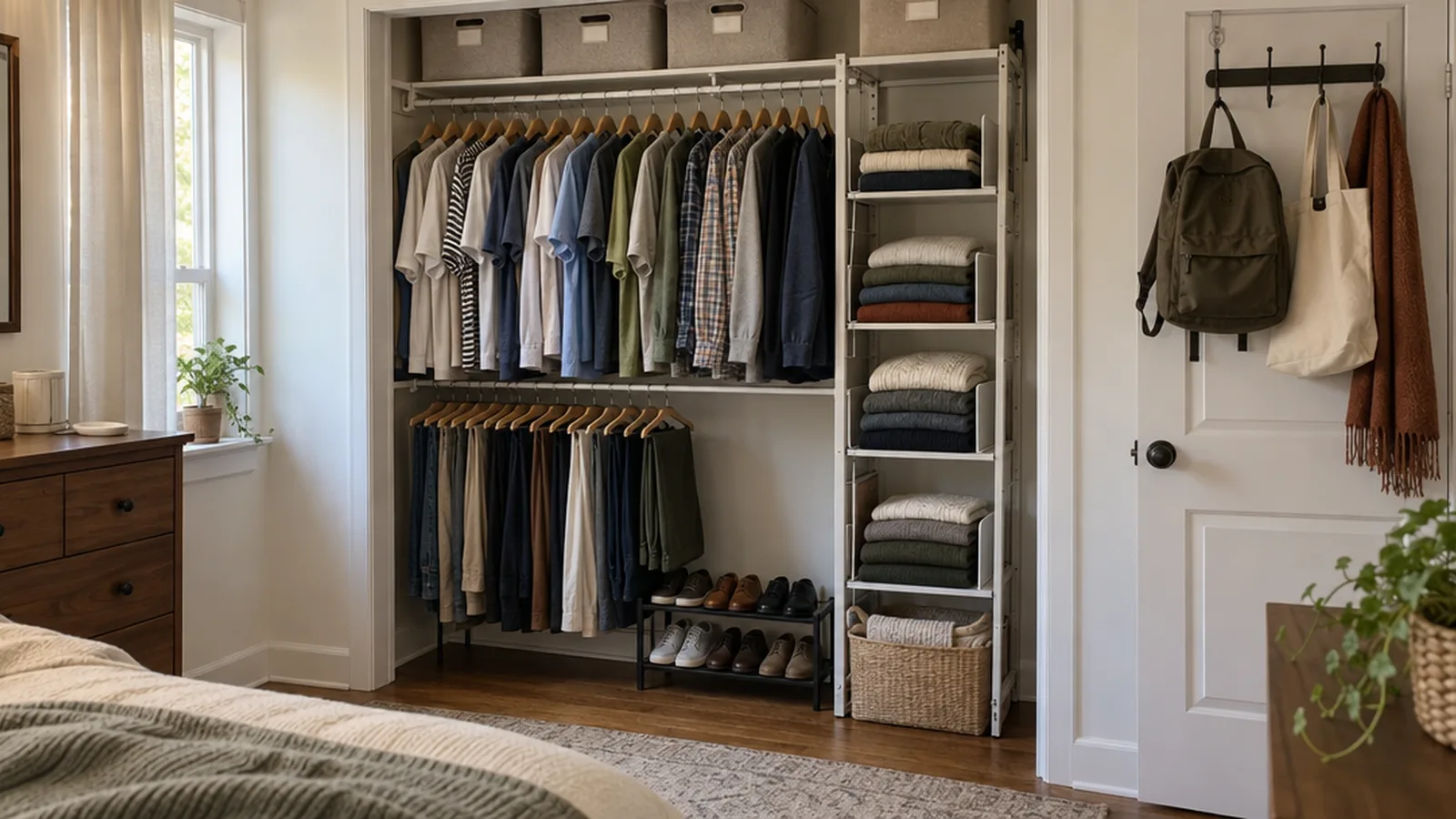
Closets are where a busy morning either goes smoothly or falls apart, so this section starts with how your family actually gets dressed. You’ll find practical help for walk-in, reach-in, linen and coat closets, along with dresser drawers, folding methods and ways to store clothes when there’s no closet at all. Every idea comes with a budget path and a renter-friendly path, because plenty of good closets are built without a single hole in the wall.
What the Closets section covers
This category covers every kind of closet and the clothing kept in it. That includes closet systems you buy, closet systems you build, no-drill shelving for rentals, dressers and drawer dividers, and space-saving folding. Laundry rooms, bedroom furniture layouts and mudroom benches have their own sections, so the guides here stay focused on storage for clothes, shoes, linens and coats.
Main closet topics
The articles in this category are grouped into eight sub-topics. Start with the one that matches the closet giving you the most trouble.
Walk-in closets
A walk-in closet has room to work with, which also makes it easy to waste space. These guides look at zones, realistic small walk-in dimensions, islands, vanities, and how to manage a walk-in that has rods but no drawers.
Closet systems
This is the largest group, covering DIY closet organizers, flat-pack hacks, freestanding systems, reach-in layouts, corner units, and shelves built between two walls. You’ll also find standard bedroom closet dimensions and free design tools for sketching a plan before you buy anything.
Clothing storage
Clothing storage handles the things that never seem to have a home: shoes, sweaters, purses, socks and jewelry. It also covers what belongs in a dresser versus a closet, how to keep drawers smelling fresh, and how to store clothes without a closet or dresser.
Folding clothes
Good folding is the cheapest closet upgrade there is. These guides walk through t-shirts, collared shirts, long sleeves, jeans, shorts and socks, plus upright drawer folding and folding boards you can buy or make.
Dresser organization
Dresser guides cover what goes on top, how to divide the drawers, and what a dresser can hold once the clothes move somewhere else.
Linen closets
Linen closet guides cover built-in and small linen closets, adjustable shelving, folding sheets and towels, bathroom closets, and linen storage when there’s no closet to spare.
Coat and mudroom closets
The front-hall closet takes a beating from boots, backpacks and sports bags. These guides show how to organize a coat closet and how to turn a closet into a mudroom-style drop zone.
Decluttering clothes
Sometimes the closet isn’t the problem, and the amount of clothing is. This group offers gentle, practical ways to declutter clothes, from minimalist wardrobes to the very common feeling of liking everything you own and having nowhere to put it.
Budget and renter-friendly closet ideas
Many of the most useful closet changes cost little and leave no trace. A second hanging rod, a freestanding shelf tower, over-the-door hooks, shelf dividers and a set of matching bins can make a reach-in closet hold far more. When a guide recommends drilling or a built-in, we try to offer a no-drill alternative alongside it so renters aren’t left out. Shared closets, nursery closets, attic closets and cleaning-supply closets get their own practical guides as well.
Closet safety basics
Anchor dressers and tall freestanding closet units to the wall, especially in homes with young children, because tip-overs can cause serious injuries. If your lease doesn’t allow drilling, ask your landlord about anchoring rather than skipping it, and keep heavier items in the lowest drawers. Check the weight rating on rods, brackets and shelves before loading them, and use a sturdy step stool instead of a chair for high shelves. If a closet doubles as storage for cleaning supplies, keep the chemicals up high or behind a child-resistant latch.